How to Choose an Accent Chair: Know Before You Start

Choosing the perfect accent chair means balancing style, comfort, and your room’s needs. Think about how you’ll use the chair and what look you’re going for. A great accent chair can be a focal point or a cozy reading nook.
Before you buy, consider the chair’s size in relation to your space. Also, think about the material and how it fits your lifestyle. Different fabrics offer different looks and durability. Getting these details right makes a big difference.
- Assess your room’s size and layout.
- Decide on the chair’s primary function.
- Choose a style that matches your decor.
- Consider the fabric for durability and feel.
- Measure carefully before you buy.
Ready to find that perfect piece? Let’s break down what you need to know to choose an accent chair you’ll love.
Picking Your Perfect Accent Chair
You’ve decided you need an accent chair. Great! It’s a fantastic way to add personality and function to a room. But where do you start? We’ve broken down the key steps to help you choose wisely.
Size Matters: Fitting Your Chair to Your Space
Before you fall in love with a chair’s style, consider its size. A chair that’s too big can make a room feel crowded. One that’s too small might get lost. You need the right fit.
Measuring Your Room
Take a few minutes to measure the area where the chair will go. You need to know the width and depth available. Don’t forget to think about traffic flow. Can people walk around it easily?
Measure the space with a tape measure. Write down the numbers. This will save you a lot of guesswork later on. You wouldn’t buy clothes without knowing your size, right? Furniture is the same.
Chair Dimensions to Check
Look at the chair’s dimensions when you’re shopping. You’ll see measurements for overall width, depth, and height. Also, check the seat width and depth. This tells you how much space you’ll have to sit comfortably.
Consider the chair’s scale. A club chair has a different presence than a slender slipper chair. Think about what feels right for your room. A large, overstuffed chair might overwhelm a small living room. A petite chair might look lost in a grand space.
Visualizing the Fit
Once you have your measurements, try to visualize the chair in your room. You can use painter’s tape on the floor to mark out the chair’s footprint. This gives you a real sense of its scale.
Another trick is to cut out cardboard to the chair’s dimensions. Place it where you imagine the chair going. This helps you see how it will look without the chair actually being there. It’s a simple way to avoid costly mistakes.
Functionality: What Will You Do in This Chair?
An accent chair can serve many purposes. Think about its main job. Will it be a spot for reading? A place to put on shoes? Or just a decorative element?
The Cozy Reading Nook
If you envision a reading spot, look for comfort. A chair with good back support is key. Armrests are also a plus for holding a book or a cup of tea. Some chairs have attached ottomans for extra leg support.
Many people find chairs with a bit of padding and a slightly reclined back to be ideal for reading. We found that chairs with plush cushions and durable fabrics tend to hold up well for frequent use (Apartment Therapy).
A Stylish Statement Piece
Sometimes, the chair’s main role is visual appeal. It’s there to add color, texture, or shape. In this case, style might take precedence over deep seating comfort.
You might choose a sculptural chair with a unique silhouette. Or perhaps a chair in a bold pattern. Even a simple chair in an unexpected color can make a big impact. The goal is to draw the eye and add personality.
Extra Seating for Guests
If the chair is for occasional extra seating, consider how easy it is to move. A lighter chair might be better. Also, think about its style. It should complement your existing furniture.
When it’s just for guests, comfort is still important. But you might not need the deep cushioning of a dedicated reading chair. A firm but comfortable seat will work well.
Style and Aesthetics: Matching Your Decor
Your accent chair should feel like it belongs in your room. It can either blend in or stand out. It’s all about the look you’re going for.
Modern and Contemporary
For a modern look, think clean lines and minimalist design. Materials like metal, leather, and smooth upholstery are common. Colors are often neutral, but bold accents are also popular.
Consider chairs with geometric shapes or sleek, metallic legs. These often have a sophisticated and uncluttered feel. Many experts suggest that modern chairs often feature a lower profile and open arm designs (Dwell Magazine).
Traditional and Classic
Traditional accent chairs often feature details like tufting, rolled arms, and carved wood legs. Fabrics like velvet, damask, and fine chenille fit this style.
If your room has classic elements, look for chairs that echo those details. A wingback chair is a timeless choice for a traditional setting. These chairs offer a sense of established elegance.
Bohemian and Eclectic
Boho and eclectic styles embrace pattern, texture, and a mix of influences. Think natural materials, vibrant colors, and unique shapes.
Rattan chairs, chairs with tribal prints, or chairs with fringe details can add a boho vibe. Don’t be afraid to mix and match! The key is to create a space that feels curated and personal.
Mid-Century Modern
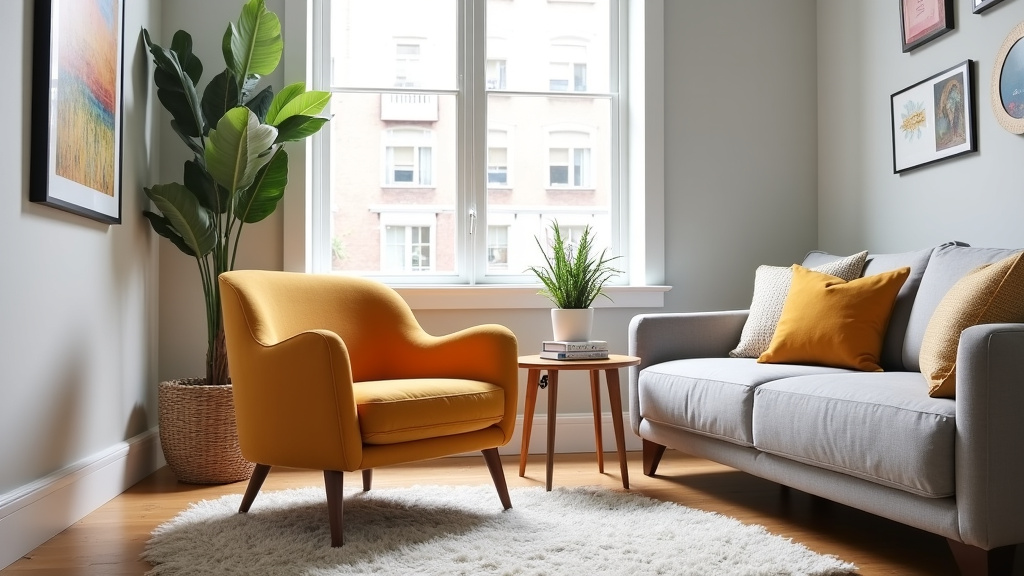
This style is known for its organic shapes, tapered legs, and often a blend of wood and upholstery. It’s a popular choice for its timeless appeal.
Look for chairs with simple silhouettes and a focus on natural materials. Walnut or teak finishes are common. These chairs add warmth and a touch of retro charm.
Fabric and Material: Durability Meets Comfort
The fabric of your accent chair impacts its look, feel, and how well it holds up to daily life. Consider your lifestyle when choosing.
Performance Fabrics
If you have kids or pets, or if the chair will get a lot of use, performance fabrics are a smart choice. They are designed to resist stains, moisture, and wear.
These fabrics are often treated to be more durable. Many are also easy to clean. We found that materials like Crypton or Sunbrella perform exceptionally well in high-traffic areas (Good Housekeeping).
Natural Fibers
Cotton, linen, and wool are natural fiber options. They offer breathability and a soft feel.
Cotton is generally affordable and comfortable. Linen has a lovely drape and a slightly textured look. Wool is warm and durable but can be more expensive. Be aware that natural fibers can sometimes be more prone to staining and wrinkling.
Leather and Faux Leather
Leather offers a classic, sophisticated look that can age beautifully. It’s durable and easy to wipe clean.
Faux leather offers a similar aesthetic at a lower price point. Modern faux leathers can be quite convincing. Both can be great choices for a stylish and practical chair.
Velvet and Chenille
These fabrics add a touch of luxury and softness. Velvet has a rich, plush pile. Chenille has a distinct fuzzy texture.
They can be very comfortable but may require more care. Some people find they can show wear more easily than other fabrics. Consider how much wear and tear the chair will endure.
Quick Checklist for Choosing Your Accent Chair
Ready to make a decision? Run through this quick checklist:
- Measure your space and available room.
- Consider the chair’s purpose: reading, decor, or seating?
- Define your room’s style: modern, traditional, boho?
- Think about your lifestyle for fabric choice (kids, pets, etc.).
- Check the chair’s dimensions against your measurements.
- Visualize the chair in your room before buying.
Conclusion
Choosing the right accent chair is about smart planning and knowing your own space and needs. You’ve learned how to measure carefully, consider the chair’s main purpose, and match its style to your decor. We also looked at how fabric choice affects durability and comfort for your lifestyle. By following these steps, you’re well on your way to finding a chair that looks great and feels wonderful. Now, take those measurements and start shopping for your perfect accent piece!
Frequently Asked Questions
How do I know if an accent chair is too big or too small for my room?
Measure the space where the chair will go and note the available width and depth. Compare these to the chair’s dimensions, ensuring there’s enough room for people to walk around it comfortably. A chair should fill its intended space without making the room feel crowded or looking lost.
Should I prioritize comfort or style for an accent chair?
It depends on the chair’s main purpose. If it’s for reading or lounging, comfort is key with good back support and cushioning. If it’s purely decorative, style might be more important, allowing for a more sculptural or visually striking design. If the chair’s main purpose is reading, our guide to what makes a good reading chair can help.
What’s the best fabric for a busy household with kids or pets?
Performance fabrics are your best bet. We found materials like Crypton or Sunbrella are designed to resist stains, moisture, and wear, making them easy to clean and durable. Natural fibers like cotton can also work but may require more frequent attention.
Can I mix and match accent chair styles in one room?
Yes, especially in bohemian or eclectic decor styles. The key is to create a curated look rather than a mismatch. You can tie different pieces together with a shared color, material, or theme to maintain a cohesive feel.
How can I visualize a chair in my room before buying it online?
You can use painter’s tape on the floor to mark out the chair’s dimensions and see its footprint. Another helpful trick is to cut out cardboard to the chair’s size and place it where you envision the chair. This gives you a good sense of scale.