Are Accent Chairs Comfortable? What to Know

Yes, an accent chair can be very comfortable, but its comfort level depends entirely on its specific design, materials, and construction. You’ve likely sat in a beautiful accent chair that felt like a wooden rock—proving style doesn’t always equal comfort.
Unlike your main sofa, a chair’s primary job might be to add color or define a space. We found that deep seats, supportive cushions, and good back angles are key factors that make a difference. Many experts say you should test a chair in person if possible to check its comfort for your body.
- Comfort varies widely between styles, from plush club chairs to sleek modern designs.
- Cushion fill matters: High-density foam holds shape, down is soft but needs fluffing, and fiberfill is budget-friendly.
- Frame and springs provide the foundational support you can’t always see.
- Your intended use is critical: a reading nook needs different support than a occasional perch.
- Material choice (fabric, leather) affects softness, temperature, and long-term wear.
Below, we’ll break down everything you need to know to choose an accent chair that’s both a visual and a comfort win for your home.
Understanding Accent Chair Comfort Levels
So, can you actually sink into an accent chair for hours? The answer is a clear **yes** for many chairs, but a definite **no** for others. It all comes down to how the chair was built. Think of it like this: a sleek metal dining chair is designed for short meals, while a plush armchair is made for long evenings. We found that treating an accent chair purely as decoration often leads to disappointment. You want a piece that works hard for both your eyes and your body.
Comfort isn’t a single feature. It’s the result of several parts working together. You need to look at the whole picture: what you sit on, what supports your back, and what the frame is made of. Let’s break down the anatomy of a comfortable accent chair.
Key Features That Create (or Kill) Comfort
Not all chairs are created equal. Here’s where you need to focus your attention when shopping.
The Seat: Your Primary Contact Point
The seat is where comfort begins. If it feels wrong, nothing else matters.
Depth and Height
This is a huge factor many people overlook. A deep seat (over 22 inches) lets you recline but might be bad if you’re shorter. Your feet should rest flat on the floor with a bit of space behind your knees. If you’re tucked into the corner of a deep seat, it might be too big. A seat height between 16 and 20 inches is a standard range that works for most adults (Mayo Clinic).
Cushion Fill and Firmness
The stuff inside the cushion defines the sitting experience. We found that no single type is “best”—it depends on your preference.
- High-Density Foam: Holds its shape well. It’s firm and supportive but can feel stiff at first.
- Down and Feathers: Incredibly soft and moldable. The trade-off is that it needs regular fluffing and isn’t as supportive.
- Fiberfill: Often the most budget-friendly. It’s soft but can flatten out over time.
- Mixes: Many good chairs use a foam core wrapped in fiber or down. This gives you support with a softer initial feel.
The Frame and Support System
What’s inside the chair matters more than what’s outside.
Frame Construction
A solid hardwood frame (like kiln-dried oak or maple) is the foundation of a durable, comfortable chair. Particleboard or metal can work, but they often lack the same long-term support and stability. You can’t see this, but you’ll feel its absence in a wobbly chair.
Suspension: Springs and Webbing
This is the chair’s skeleton of support. Eight-way hand-tied springs are a hallmark of high-quality construction, offering balanced support. Sinuous (S-shaped) springs are also common and effective. Elastic webbing is a lighter, more affordable option but may sag sooner. Without good suspension, even the best cushion will feel bottomed-out.
The Backrest and Arms
These parts keep you from slouching and provide crucial relaxation points.
An ergonomic backrest should follow the natural curve of your spine. A slight recline of 100 to 110 degrees is often cited as a comfortable range for lounging (Ergonomics in Action). If the back is too upright, you’ll feel like you’re sitting at a desk. If it’s too far back, it can be hard to get out of.
Armrests should let your shoulders stay relaxed. If they’re too high, you shrug. Too low, and you slump. The ideal spot allows your elbows to rest at a 90-degree angle when seated upright.
Choosing a Chair for Its Intended Use
A comfortable chair fits your life. Ask yourself: where will it go, and how will I use it?
The Reading Nook Chair
You’ll be in this chair for a while. Prioritize deep seats, soft (but supportive) cushions, and a supportive back. A matching ottoman is a huge bonus, letting you put your feet up. Comfort is king here.
The Occasional Perch Chair
This might be the chair in your entryway or next to a dining table. You’ll only use it briefly. Here, you can prioritize style over marathon comfort. A firmer seat and more upright back are perfectly fine. It’s all about that first impression.
The Pair in the Living Room
If you’re buying two accent chairs to face your sofa, think about conversation. Chairs with good armrests and a comfortable (but not too deep) seat encourage easy talking without forcing you to sink in and recline.
Materials: How They Affect Feel and Function
The covering isn’t just about color and pattern. It changes the chair’s day-to-day feel.
Upholstery fabrics range from smooth and cool (like linen blends) to warm and textured (like chenille or velvet). Soft, plush fabrics often feel cozier but can be harder to clean. We recommend checking the material’s durability rating, like a double rub count, for high-use chairs.
Leather is durable and develops a unique patina. It can feel cool initially but warms to your body. It’s a classic choice, but quality and cost vary wildly.
Performance fabrics are engineered to resist stains, fading, and moisture. They’re a smart pick for homes with kids or pets and can be surprisingly soft and comfortable.
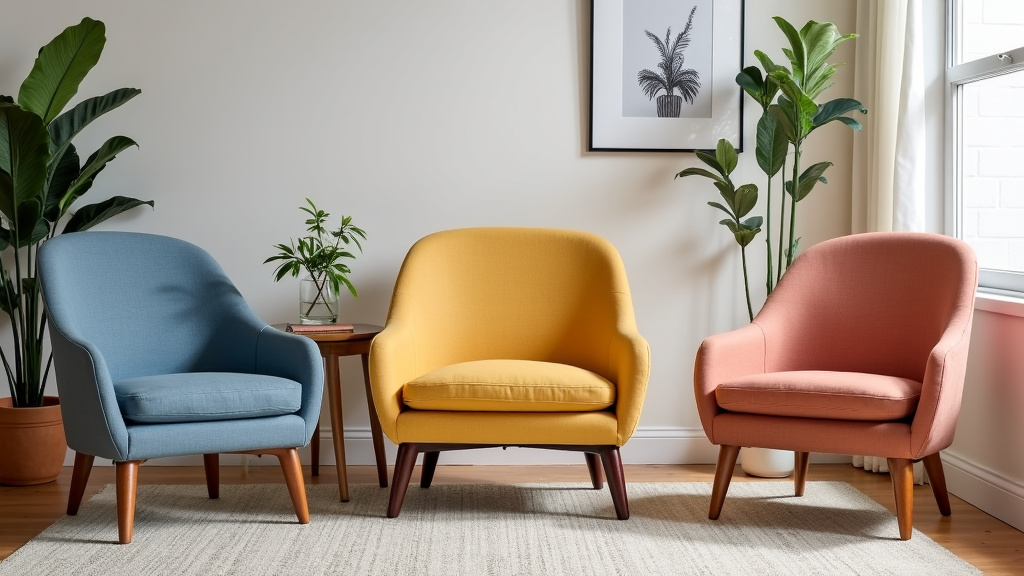
Cushion Fill Comparison Guide
Here’s a quick-reference table to help you understand common cushion materials.
| Fill Type | Feel | Support Level | Maintenance | Best For |
|---|---|---|---|---|
| High-Density Foam | Firm, consistent | High | Minimal | Primary seating, lasting shape |
| Down/Feather Blend | Soft, sink-in | Low to Medium | Requires regular fluffing | Luxurious comfort, occasional use |
| Polyester Fiberfill | Soft, plush | Low | Can flatten over time | Budget-friendly pieces, light use |
| Foam Core with Down Wrap | Soft initial touch, firm core | High | Moderate fluffing needed | Best of both worlds, everyday comfort |
Your Comfort Checklist Before You Buy
When you’re in the store or reading specs online, run through this mental list.
- Test the Seat Depth: Sit all the way back. Is there a fist-sized space between the seat edge and the back of your knees?
- Check the Back Angle: Does the backrest support your lower back? Can you lean back comfortably?
- Assess Arm Height: With your arms resting, are your shoulders relaxed and down?
- Feel the Cushion: Does it feel too hard, too soft, or just right? Press down—does it bounce back?
- Imagine Daily Use: Can you picture yourself reading or talking here for an hour? Does it feel inviting?
The In-Person Test vs. Online Shopping
We always recommend trying to sit in a chair before buying. It’s the only way to know for sure. But what if you’re shopping online? You can still gather clues.
Look for detailed dimensions: seat height, seat depth, and overall depth are critical. Read customer reviews, specifically searching for words like “comfort,” “firm,” or “soft.” Pay attention to the fill materials listed in the product specs. Reputable brands often provide this information because they know informed customers care about construction.
Remember, a beautiful chair is a wonderful addition to a room. A beautiful and comfortable chair becomes a beloved part of your home. Take the time to find the right match for both your space and your body.
Conclusion
So, are accent chairs comfortable? They absolutely can be, but only when you choose one built for your needs. Remember, comfort comes from the right mix of seat depth, cushion fill, frame support, and a good back angle. We found that treating a chair as just a decoration often leads to disappointment. Your best move is to use the checklist and test the chair in person if you can. If shopping online, rely on detailed specs and customer reviews. Take your time, and you’ll find a chair that looks great and feels even better.
Frequently Asked Questions
How can I tell if an accent chair is comfortable without sitting in it?
Look for detailed measurements like seat depth and height. Read customer reviews focusing on comfort keywords. Check the fill material and frame construction in the product specs. These clues can give you a good idea of the chair’s comfort level.
What is the best cushion fill for an accent chair that will be used daily?
For daily use, a high-density foam core wrapped in fiber or down offers the best balance of support and comfort. This combination provides firm support without feeling too hard. It also holds its shape well over time with regular use.
Are leather accent chairs as comfortable as fabric ones?
Leather can be very comfortable, but it feels different. It’s firm and smooth at first, but it warms to your body and becomes supple over time. Fabric chairs often feel softer immediately, but leather is more durable and easier to clean.
What should I look for in an accent chair for a reading nook?
Prioritize a deep seat, supportive cushions, and a backrest that allows for a slight recline. An ottoman can add extra comfort by letting you put your feet up. Make sure the chair’s height and angle keep you relaxed for long periods.
How do I know if an accent chair is the right size for me?
Check the seat height (16-20 inches is standard) and seat depth (over 22 inches for deeper seats). Your feet should rest flat on the floor, with space behind your knees. If possible, sit in the chair to ensure it fits your body.