How to Choose a Chair for a Short Person
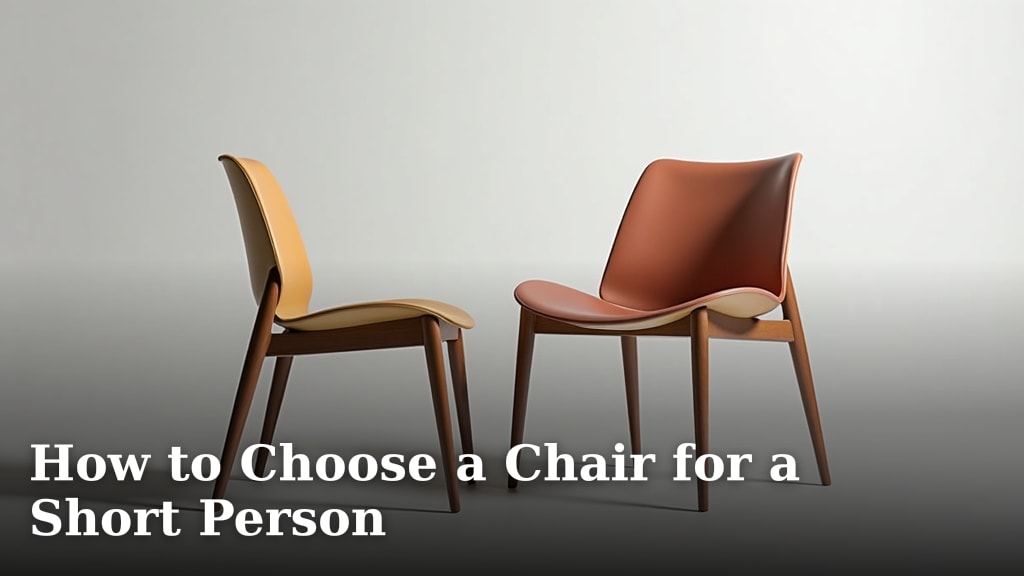
Choosing the right chair when you’re shorter can make a big difference in your comfort and posture. The key is to focus on seat depth, seat height, and back support. Look for chairs with adjustable features so you can customize the fit to your body. A chair that fits well prevents leg discomfort and back strain.
Many standard chairs are designed for average heights. This can leave shorter individuals with their feet dangling or struggling to sit comfortably. We found that considering chairs with specific short-person features or those known for their high adjustability is essential. This ensures you get proper ergonomic support, not just a place to sit.
- Look for adjustable seat height.
- Check seat depth to ensure your legs are supported.
- Prioritize chairs with good lumbar support.
- Consider footrests if a chair’s height is still an issue.
Let’s walk through exactly what to look for and how to measure to find your perfect chair.
You’ve already read how important it is to find a chair that fits your shorter frame. Now, let’s get into the nitty-gritty details. We’ll help you understand what measurements matter most and how to look for chairs that truly support you. Think of this as your personal guide to comfortable sitting, no matter your height.
Finding the Right Chair Fit for Shorter Folks
It’s all about getting the proportions right. When you sit, your body should feel supported, not awkward or strained. We found that focusing on a few key dimensions can make all the difference. These aren’t just numbers; they’re your ticket to better comfort and posture.
Understanding Seat Depth: Your Legs Will Thank You
Seat depth is probably the most critical measurement for shorter individuals. It’s the distance from the front edge of the seat to the backrest. If the seat is too deep, the back of your knees won’t be able to reach the edge of the cushion. This can cause your legs to feel unsupported. It can also push you forward on the seat, preventing you from using the backrest properly.
How to Measure Seat Depth for Yourself
Sit on a chair with your back against the backrest. Place a book or your fist between the back of your knees and the edge of the seat cushion. The distance between the back of your knees and the edge of the seat is the ideal seat depth for you. Many experts suggest a gap of about 2-4 fingers’ width (National Institute for Occupational Safety and Health – NIOSH).
What to Look For in Seat Depth
You’ll want to look for chairs with a shorter seat depth. Some chairs are specifically designed with this in mind. Others offer adjustable seat depth, allowing you to slide the seat forward or backward. This is a fantastic feature for customizing your fit. Always check the product specifications for the seat depth dimension.
Mastering Seat Height: Ground Your Feet Properly
Seat height determines how high your chair sits off the floor. If the seat is too high, your feet might dangle. This can put pressure on the back of your thighs. It can also lead to poor circulation and general discomfort. You want your feet to rest flat on the floor or on a footrest.
How to Measure Your Ideal Seat Height
Sit on the floor with your back against a wall. Measure the distance from the floor to the back of your knees. This measurement gives you a good starting point for your ideal seat height. However, it’s essential to consider the thickness of the seat cushion as well. A common recommendation from ergonomic specialists is that your thighs should be roughly parallel to the floor when seated (Cleveland Clinic).
Adjustable vs. Fixed Seat Height
Chairs with adjustable seat height are your best bet. Most office chairs have a pneumatic lever that allows you to easily raise or lower the seat. You should aim for a seat height where your feet are flat on the floor, and your knees are bent at about a 90-degree angle. If a chair’s minimum height is still too high, a sturdy footrest becomes a necessary accessory.
Back Support: More Than Just a Place to Lean
Good back support is crucial for everyone, but especially when standard chairs don’t fit well. You need a chair that supports the natural curve of your spine. This is often referred to as lumbar support.
The Importance of Lumbar Support
Your lower back has a natural inward curve. A chair with proper lumbar support helps maintain this curve. Without it, you might slouch or lean forward, putting unnecessary strain on your back muscles. We found that prolonged sitting without adequate lumbar support is a common cause of back pain for many people (Mayo Clinic).
Types of Back Support Features
Some chairs have built-in lumbar support that is contoured to fit the lower back. Others have adjustable lumbar support that you can move up or down, or even in and out, to match your unique spinal curve. Even if a chair doesn’t have explicit lumbar support, a well-designed backrest that encourages good posture can still be effective. Look for chairs that curve inward slightly in the lower back area.
Beyond the Basics: Other Features to Consider
Once you’ve got a handle on seat depth, height, and back support, there are a few other features that can enhance your comfort and usability.
Armrest Adjustability: Finding Your Sweet Spot
Armrests can be great for reducing strain on your shoulders and neck. However, if they’re too high or too far apart, they can actually cause problems. For shorter individuals, armrests that are too high can force your shoulders to hunch up. If they’re too low, they offer little support. The ideal is to have armrests that are adjustable in height and width. This allows you to position them so your arms rest comfortably with your shoulders relaxed.
Chair Casters and Base: Stability Matters
While not directly related to your seated height, the chair’s base and casters can affect overall usability. A stable five-star base is standard for most office chairs and provides good stability. Casters should be appropriate for your floor type. If you’re using a chair with a very high minimum seat height, a chair with a wider base might feel more secure.
When Standard Chairs Just Won’t Do: Alternative Solutions
Sometimes, even with the best research, a standard chair might still not be the perfect fit, or you might be looking for a specific type of chair. Don’t worry, there are always options!
Chairs Specifically Designed for Shorter Users
We found that some manufacturers now offer chairs explicitly marketed towards shorter individuals. These chairs often come with shorter seat depths and lower maximum seat heights as standard. Searching for terms like “petite office chair” or “short person chair” can help you find these specialized options.
The Power of a Good Footrest
If you find a chair you love but its seat height is slightly too high, a good footrest can be a game-changer. Look for an adjustable footrest that allows you to position your feet comfortably and securely. This ensures you maintain proper leg posture and avoid that dangling-feet feeling. It’s a simple, often inexpensive solution that can make a standard chair work for you.
Customization and Built-to-Order Options
For those who need a very specific fit, consider companies that offer custom or built-to-order chairs. While this can be a more expensive route, it guarantees a chair designed precisely for your dimensions. This is especially useful if you have unique ergonomic needs or have struggled to find a comfortable fit elsewhere.

Your Chair Shopping Checklist
Ready to find your perfect seat? Keep this handy list with you:
- Measure your inseam (from floor to back of knee).
- Measure your thigh depth (from back of knee to edge of seat).
- Check the chair’s seat depth and compare it to your measurements.
- Verify the adjustable seat height range and its lowest setting.
- Look for adjustable lumbar support or a contoured backrest.
- Consider armrest adjustability for comfortable arm positioning.
Conclusion
Finding the right chair as a shorter person doesn’t have to be a challenge. You’ve learned that focusing on key measurements like seat depth and seat height is essential for your comfort. Prioritizing chairs with good lumbar support and adjustable features will ensure proper posture and prevent strain. Don’t forget that even a great chair can be improved with a footrest if needed. Now, take your measurements and start looking for a chair that truly supports your body.
Frequently Asked Questions
What is the most important measurement for a short person when buying a chair?
The most critical measurement for shorter individuals is seat depth. If the seat is too deep, it won’t support the back of your knees, forcing you to sit forward. This prevents proper back support and can lead to discomfort.
How can I tell if a chair’s seat height is right for me?
When seated, your feet should rest flat on the floor, and your knees should be bent at approximately a 90-degree angle. If your feet dangle or your thighs are angled upwards, the seat is likely too high for you.
What if a chair’s lowest seat height is still too high for my feet to reach the floor?
If the chair’s minimum height is still too tall, a good quality, adjustable footrest is your best solution. This will allow you to maintain proper leg posture and avoid pressure on the back of your thighs.
Are chairs designed specifically for shorter people really different?
Yes, chairs designed for shorter users often have a shorter standard seat depth and a lower maximum seat height. They are built with smaller dimensions in mind, which can be much more comfortable than trying to adapt a standard chair.
What is “lumbar support” and why do I need it?
Lumbar support refers to the curve in a chair’s backrest that matches the natural inward curve of your lower spine. It helps maintain good posture and prevents back strain from slouching, which is especially important if you struggle to sit comfortably in standard chairs.